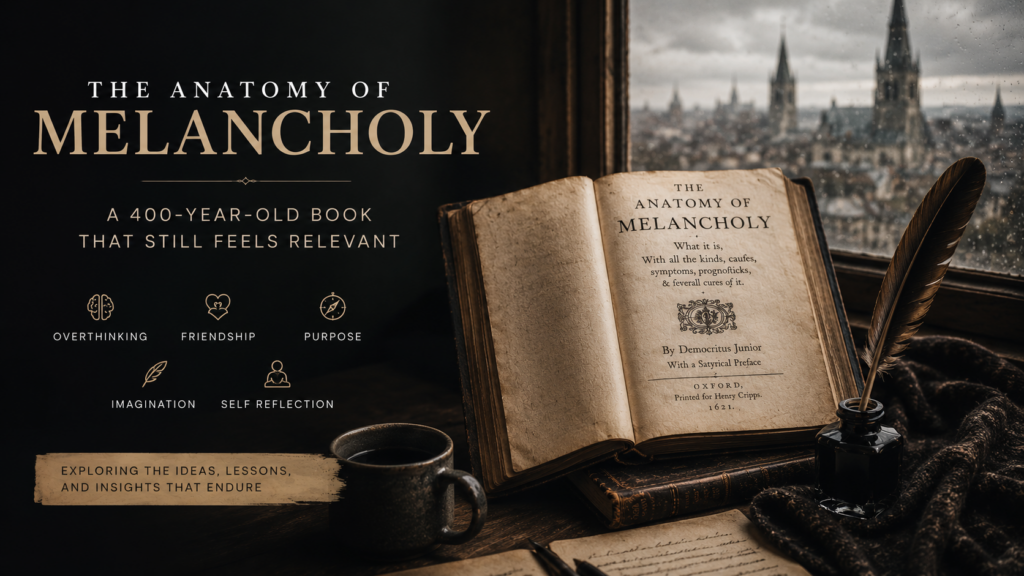
The Anatomy of Melancholy: A 400-Year-Old Book That Still Feels Relevant
I recently heard about a book, from a person on Instagram who buys old books, and he mentioned one called: The Anatomy of Melancholy. As someone who spends most of my free time creating music and videos rather than reading long books, I was curious what it was actually about because the title sounded right up my ally.
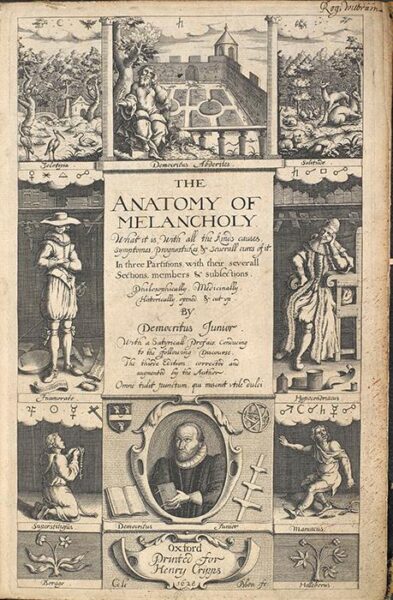
 Written by Robert Burton and first published in 1621, the book explores melancholy—not just sadness, but the broader struggles of being human. Burton examines loneliness, anxiety, love, purpose, friendship, overthinking, and the ways our minds can sometimes work against us.
The central idea is surprisingly modern: people often suffer not only because of what happens to them, but because of what they imagine might happen. Burton observed that we worry about futures that haven’t arrived, replay events that can’t be changed, and become trapped in stories we tell ourselves.
One of the themes that stood out to me is his belief that the mind can become its own prison. A person can be safe, successful, or surrounded by opportunities, yet still create endless anxiety through imagination and rumination.
Burton also writes about what he called “love melancholy.” His observation was that people often fall in love with an idea rather than a real person. They build a story in their minds and then struggle when reality doesn’t match the story.
Another recurring theme is the importance of meaningful activity. Burton believed that purpose, creativity, and engagement with life help keep melancholy from taking over. In today’s world, that might mean creating art, making music, building something, learning new skills, or pursuing work that feels meaningful.
He also emphasized friendship and genuine connection. Isolation, he argued, tends to magnify suffering, while conversation and companionship help keep our perspective grounded.
Perhaps the most enduring lesson from the book is that melancholy may never disappear entirely. Burton wasn’t searching for a perfect cure. Instead, he encouraged people to recognize when melancholy is shaping their view of the world and to avoid letting it become the only lens through which they see life.
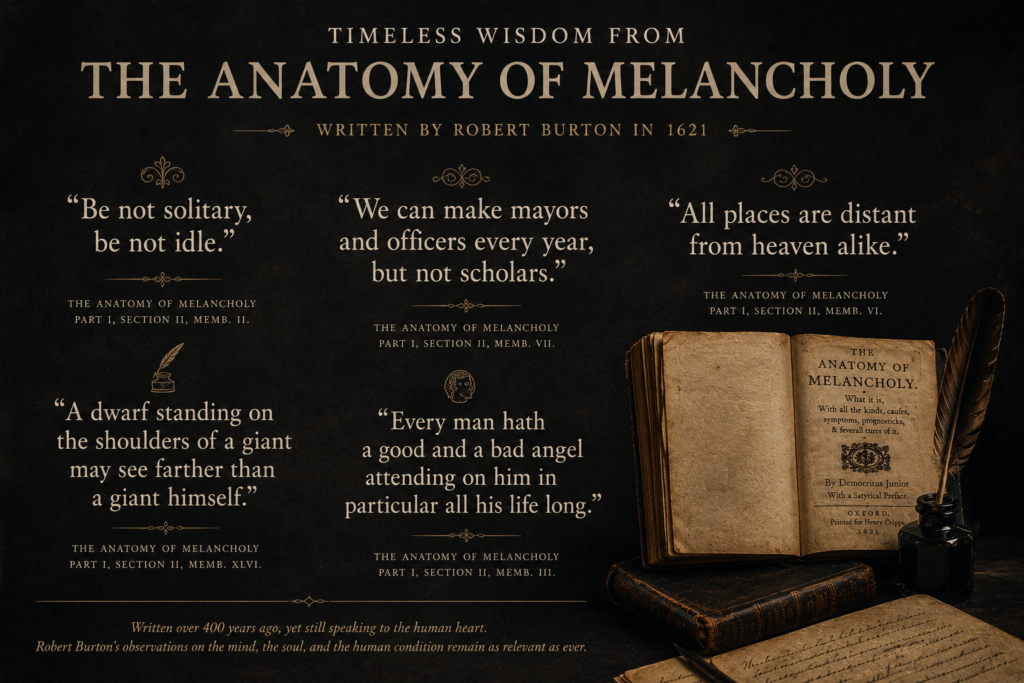
Here are some additional quotes from the book, how they pertain to modern life, and below is more ‘tabbed’ content and ‘cliff notes’ from the book:
Main Thesis
Human beings suffer because:
- We think too much.
- We imagine futures that haven’t happened.
- We obsess over things we cannot control.
- We compare ourselves to others.
- We become trapped inside our own minds.
Burton believed melancholy wasn’t just an illness.
It was a natural hazard of being a thoughtful human being.